

Table of Contents
Key Takeaways
- Insulation slows heat transfer, but it does not stop air leaks by itself.
- Air sealing is usually most effective when completed before new insulation is installed.
- Attics, ducts, access hatches, ceiling openings, and exhaust vents can all affect comfort.
- Managing humidity and bulk water is as important as reducing heat gain in hot, humid areas.
- The right approach depends on the home’s design, existing conditions, roof assembly, and HVAC equipment.
Why Warm, Humid Homes Feel Uncomfortable
A home can feel hot, sticky, or uneven even when the air conditioner is running. Sun-heated roofing, attic heat, outdoor air leaks, duct losses, and inadequate insulation can combine to make rooms difficult to cool, especially upstairs or near exterior walls. Comfort is more than the number on a thermostat. Indoor humidity, air movement, warm ceiling surfaces, and room-to-room temperature differences all matter. Two homes on the same street may have very different conditions because one has a more continuous thermal boundary, fewer openings between the attic and living space, and better control of unwanted moisture.
Insulation And Air Sealing Do Different Jobs
Insulation slows the movement of heat through a building assembly. Air sealing limits the movement of air through cracks, joints, wiring holes, plumbing penetrations, attic hatches, and other gaps. Both are needed because moving air can carry heat and moisture into places where they create comfort or durability concerns. A simple way to separate these jobs is to remember that insulation slows heat, air sealing slows air, ventilation manages intentional air exchange, and moisture control addresses water and humidity. Adding insulation over large leaks may improve conditions somewhat, but it can leave the underlying pathways for hot, humid air untouched. Other parts of the exterior enclosure also deserve attention. For example, well-fitted garage doors can matter when an attached garage shares walls, ceilings, or air pathways with living areas, particularly if rooms above or beside the garage are consistently uncomfortable. When planning work for a vented attic, the ceiling plane is a key focus. Guidance on air sealing existing attics emphasizes sealing accessible ceiling penetrations before insulation covers them, since those details are harder to inspect and reach afterward.
Why The Attic Often Comes First
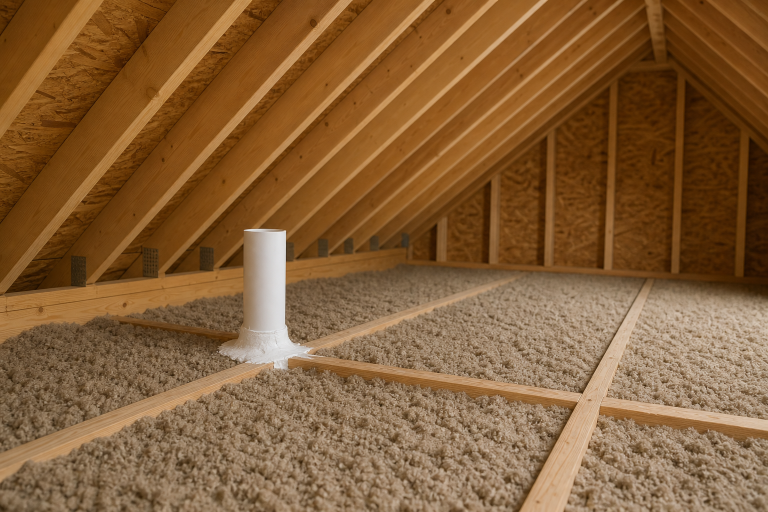
An attic can absorb substantial solar heat during long summer days. If the attic floor has thin, compressed, uneven, or disturbed insulation, that heat can transfer toward the rooms below. Leaky ducts and air handlers in the attic can add another source of wasted cooling capacity. During an attic review, look for uneven insulation depth, open gaps around pipes and wires, unsealed attic access panels, recessed lights, disconnected bathroom exhaust ducts, and condensation around mechanical equipment. Also, check that soffit, ridge, or other intended ventilation routes have not been blocked by loose-fill material. Vented and unvented attics use different strategies. In a vented attic, insulation is commonly installed on the attic floor, and the attic remains outside the conditioned space. In an unvented design, insulation may be installed along the roofline. Neither approach is automatically best. Roof design, duct location, moisture conditions, local requirements, and combustion-safety considerations should shape the decision.
How Moisture Changes Home Comfort
Insulation is not a dehumidifier, and it cannot correct a roof leak, plumbing leak, poor drainage, or damp crawl space. Humidity can also rise when bathrooms and kitchens lack effective exhaust, a dryer vents indoors, ducts leak, or an oversized air conditioner cools quickly and doesn’t run long enough to remove much moisture. Practical moisture control begins with stopping leaks and directing water away from the building. The main ways to control moisture in a home include repairing leaks, exhausting bathrooms and kitchens to the outdoors, venting dryers to the outdoors, and using cooling or dehumidification appropriately in hot, humid climates. Musty odors, stained drywall, damp insulation, visible mold growth, and repeated condensation are reasons to investigate before covering an area with new material. Building assemblies need a way to stay dry or dry out, so vapor-resistant products should be chosen with the entire wall, ceiling, or roof assembly in mind.
Common Insulation Materials
Fiberglass Batts And Loose Fill
Fiberglass batts and rolls are widely used in open cavities, while blown fiberglass can provide broad coverage from the attic to the floor. Their performance depends heavily on complete and even installation. Gaps, folds, compression, and uncovered edges reduce effectiveness.
Cellulose
Cellulose is commonly installed as loose fill in attics or as dense pack in enclosed cavities. It can work well where consistent coverage is possible, but any active water issue should be corrected first, as wet insulation can reduce performance and exacerbate other problems.
Spray Foam, Rigid Foam, And Mineral Wool
Spray foam can provide insulation and air sealing in certain locations, while rigid foam and mineral wool may be used on specific walls, rooflines, or floor assemblies. Material selection should consider fire safety, moisture behavior, service access, roof details, and the need to keep electrical or mechanical components accessible.
Warning Signs To Watch For
- Upstairs bedrooms or rooms over garages remain warmer than other spaces.
- The air conditioner runs for long periods, yet the house still feels humid.
- There are major temperature differences between floors or rooms.
- Attic insulation looks thin, compressed, patchy, or disturbed.
- Dust marks appear around ceiling fixtures, registers, or access panels.
- Condensation forms on ducts, cold pipes, or windows.
- Musty smells develop near closets, attics, crawl spaces, or exterior walls.
These signs do not prove that insulation is the only cause. Window exposure, roof condition, duct leakage, HVAC maintenance, thermostat settings, and shading can also contribute to poor comfort.
A Practical Upgrade Process
- Inspect first. Review the attic, roof, ducts, access points, insulation condition, and visible signs of moisture.
- Fix water issues. Address roof leaks, plumbing leaks, drainage concerns, and wet crawl-space conditions before insulation work.
- Seal accessible openings. Focus on ceiling penetrations, duct boots, hatches, wiring, plumbing, and wall-top gaps.
- Choose the thermal boundary. Determine whether insulation belongs at the attic floor, roofline, walls, floors, or several locations.
- Install evenly and verify. Check coverage depth, ventilation paths, clearances around heat-producing fixtures, and duct condition when the work is finished.
Common Questions
Does More Insulation Always Make A Home Cooler?
More insulation can reduce heat gain when installed in the right location and with continuous coverage. However, major air leaks, moisture problems, and duct losses can limit the improvement.
Should Air Sealing Happen Before Insulation?
In many attic projects, yes. Sealing first makes it easier to identify and reach penetrations before loose-fill insulation hides them.
Can Insulation Solve High Indoor Humidity?
It may reduce heat gain and lower the cooling load, but it cannot independently solve humid outdoor air leaks, wet building materials, poor exhaust, or HVAC sizing problems.
A Smarter Path To Home Comfort
The strongest comfort improvements come from treating the home as a connected system. A careful inspection can reveal whether the main issue is inadequate insulation, air leakage, duct problems, moisture intrusion, solar heat gain, or a combination of these factors. Addressing the actual cause first helps create a cooler, drier, and more consistent indoor environment.
Conclusion
Improving comfort in a warm, humid home requires more than simply adding insulation. Air sealing, moisture control, attic ventilation, duct performance, and HVAC operation all influence how efficiently a home stays cool and dry. Homeowners should begin with an inspection to identify the actual sources of heat gain, air leakage, uneven temperatures, or excess humidity before choosing materials or starting upgrades. Sealing accessible gaps before installing insulation can help create a more continuous thermal boundary, while correcting leaks and other moisture problems protects the building from longer-term damage. Because every home has different construction, roof, attic, and mechanical conditions, the most effective solution is a coordinated approach tailored to the property. With the right improvements and proper installation, homeowners can create a more comfortable, efficient, and durable indoor environment.
No Comments