
Table of Contents
Key Takeaways
- Pool care works best when routines change with Charlotte’s seasons.
- Pollen, rain, heat, leaves, and swimmers’ use can all affect water quality.
- Frequent inspections can reveal circulation, leak, filter, and surface problems early.
- Water testing, storm cleanup, and safety checks should be regular habits.
A backyard pool can be easier to manage when maintenance is divided into small, seasonal tasks rather than all done in one busy weekend. Homeowners who need help with inspections, repairs, or recurring care can explore local pool services, but a basic calendar also helps households understand what to watch for between visits.
Charlotte pools face changing conditions throughout the year. Spring pollen can cloud the water and clog filters; summer heat and frequent use can lower sanitizer levels; fall leaves add organic debris; and winter cold snaps can put exposed equipment at risk. Keeping simple records makes it easier to notice changes before they become larger problems.
Why a Seasonal Pool Calendar Helps
A fixed routine does not account for weather, debris, or how often people are swimming. A seasonal plan helps pool owners prioritize the tasks that matter most at a given time, whether that means removing pollen, checking a cover, cleaning a filter, or preparing plumbing for freezing weather.
It also reduces guesswork. Recording water-test results, filter pressure, water level, and unusual equipment noises creates a useful baseline. If the water becomes cloudy or the pump begins losing pressure, those notes can help identify whether the issue is new or part of a pattern.
For households that prefer a set schedule, regular pool maintenance can complement homeowners’ weekly checks. Regardless of who completes the work, consistent attention is more useful than reacting only after the water changes color or the equipment stops operating.
Late Winter: Prepare Before the Season Begins
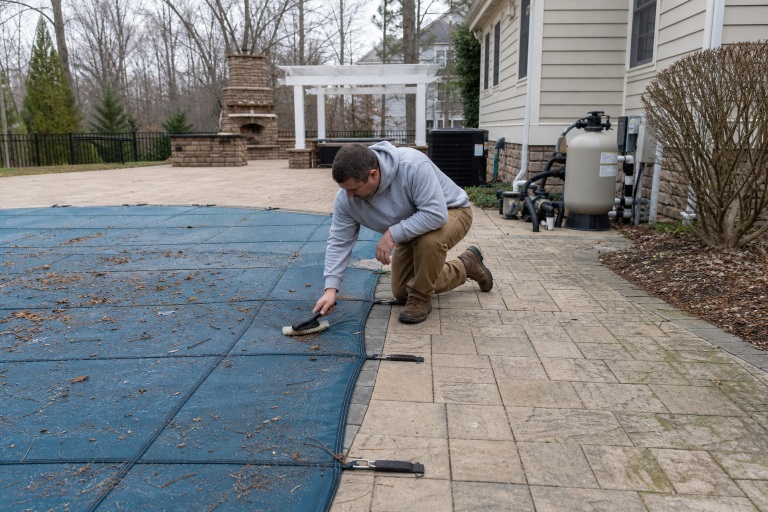
Before regular swimming begins, inspect the pool area without rushing the opening process. Remove standing water and debris from the cover, check for tears or loose anchors, and look overhead for weak branches that could fall during a storm. Examine the deck for cracks, shifting areas, or slippery buildup.
- Inspect the cover, anchors, ropes, and surrounding deck.
- Remove leaves before uncovering the pool.
- Check the pump, filter, valves, heater, lights, and controls.
- Look for stains, loose fittings, cracks, or unusual water loss.
- Restock test supplies, cleaning tools, and approved treatment products.
Spring: Manage Pollen, Debris, and Water Balance
Spring is often one of the most demanding periods for pool care. Pollen, dust, petals, and rain can make water look dull and place extra strain on baskets and filters. Skimming often, especially after windy days, prevents debris from breaking down in the water and using up sanitizer.
- Remove large debris with a leaf net.
- Brush walls, steps, corners, and the floor.
- Empty skimmer and pump baskets.
- Test pH, sanitizer, alkalinity, and stabilizer levels.
- Run circulation long enough to support effective filtration.
- Record readings and note fast changes after rain or heavy pollen.
Chlorine and pH should be checked together because each affects how well the other performs. The CDC explains how to maintain chlorine concentration and pH, including a recommended pH range of 7.0 to 7.8 for home pools.
Summer: Build a Simple Weekly Routine
Summer brings stronger sunlight, warmer water, storms, and more swimmers. These conditions can change water chemistry quickly, so divide care into short, repeatable checks rather than waiting for a single weekly cleanup.
Daily or Near-Daily Checks
- Skim visible debris and check the water level.
- Watch for cloudiness, foam, odors, or surface growth.
- Confirm that the pump is running and water is circulating.
Weekly Tasks
- Brush and vacuum the pool, or inspect the automatic cleaner.
- Clean baskets and review filter pressure.
- Test water chemistry and adjust products only as directed.
- Inspect ladders, handrails, steps, drain covers, and lights.
What to Do After a Heavy Storm
Rain can carry dirt, leaves, and organic material into the water, while high winds can damage screens, fencing, covers, or nearby equipment. Keep swimmers out until the water is clear, circulation is operating properly, and chemistry has been tested.
- Turn off equipment only if flooding or an electrical hazard is present.
- Remove branches and large debris with a net.
- Check the equipment area for standing water, damage, or loose wiring.
- Empty baskets, inspect filter pressure, then test and adjust the water.
- Brush and vacuum once it is safe to restart normal circulation.
Fall: Stay Ahead of Leaves and Cooler Weather
Leaves should not remain in a pool for long. They can stain surfaces, consume sanitizer, and burden the filtration system as they break down. During peak leaf drop, skim often and clean baskets before restricted flow affects circulation.
- Trim branches that hang directly over the water.
- Clean the filter before debris accumulates heavily.
- Inspect the cover before storing or installing it.
- Check for leaks, cracks, and loose tile before colder nights arrive.
Winter: Reduced Care or a Full Closing
Winter plans depend on the pool design, cover system, equipment instructions, and expected weather. An open pool still needs periodic chemistry checks, debris removal, and attention during freezing conditions. A closed pool needs a secure cover, a water balance before closing, and occasional inspections after severe weather.
Keep chemicals dry, labeled, locked, and separated according to their labels. The EPA outlines the risks associated with the safe storage and handling of swimming pool chemicals, including fires, harmful vapor releases, and chemical injuries.
Water Chemistry Basics for Homeowners
- pH: Affects comfort, sanitizer performance, and corrosion risk.
- Sanitizer: Helps reduce germs in the water.
- Alkalinity: Helps prevent rapid pH swings.
- Calcium hardness: Can affect surfaces and equipment.
- Stabilizer: Can help protect chlorine from sunlight when used appropriately.
Never mix pool chemicals, and always follow the product label for testing, dosing, storage, and application. Adding products too quickly or treating a pool without current test results can create avoidable water-balance problems.
Signs That a Pool Needs More Than Routine Cleaning
- Water levels drop faster than normal.
- The pump loses prime, makes unusual sounds, or has weak flow.
- Filter pressure climbs again soon after cleaning.
- Cloudiness or algae returns despite normal circulation and treatment.
- Cracks, loose tile, stains, damaged plaster, or shifting decking appear.
- Heaters, lights, or automated controls stop working.
Pool Safety Checks to Repeat All Year
Inspect barriers, self-closing gates, drain covers, lighting, rescue equipment, and chemical storage throughout the year. Keep the pool area secured when unsupervised, and promptly address loose handrails, damaged gates, slippery decking, or missing safety equipment.
A Simple Monthly Pool Care Checklist
- Test and record water chemistry.
- Inspect the pump, filter, heater, valves, plumbing, shell, tile, and deck.
- Clean baskets, filters, brushes, and automatic cleaners.
- Check the cover, fence, gate, alarms, and rescue equipment.
- Review water loss and schedule repairs before small defects grow.
Conclusion
A seasonal pool care calendar gives Charlotte homeowners a practical way to adapt to changing conditions in 2026. Spring calls for pollen control; summer requires frequent testing and cleaning; fall brings heavier debris; and winter shifts attention to covers, equipment, and freeze protection. Short inspections and accurate records can make many problems easier to catch before they interrupt the swimming season.



No Comments