

Table of Contents
Key Takeaways
- Modern exterior signage must strike a balance between aesthetics, functionality, and durability to create a lasting impression.
- Choosing the right materials and lighting techniques can significantly increase the visibility and longevity of outdoor signs.
- Compliance with local zoning regulations and accessibility standards is vital during signage planning.
- Investing in professional design, regular maintenance, and innovations can make signage a lasting and versatile investment.
- Current trends, such as digital integration and eco-friendly materials, are shaping the future of outdoor signs.
Why Exterior Signage Matters
A business’s exterior signage is often the first and most memorable interaction with potential customers and the community. Signage is more than just a label—it’s a key element in establishing brand identity and conveying essential information at just a glance. For businesses seeking to maximize visibility and foot traffic, investing in professional exterior signs for business Philadelphia PA, is a proven strategy to ensure their presence stands out day and night. The influence of effective outdoor signs goes beyond aesthetics. They offer crucial wayfinding solutions, draw in passersby, and communicate a business’s style and standards before customers even step inside. According to the Sign Research Foundation, clearly visible and well-designed signs can significantly increase sales opportunities simply by making it easier for customers to find and trust your business.
Core Elements Of Effective Sign Design
The perfect exterior sign grabs attention instantly and clearly delivers its message. Visual communication is key; balancing color, typography, and form ensures quick understanding. High-contrast palettes catch the eye and improve legibility in different lighting. Simple fonts enhance readability, and an uncluttered layout allows for quick comprehension from afar.
- Opt for bold, easily legible typefaces that work at scale.
- Prioritize a color scheme with strong contrast between text and background.
- Embed branding elements tactfully so that logos and business names enhance rather than overwhelm the message.
- Apply a clear design hierarchy to guide viewers through the information in a logical manner.
Choosing Materials For Durability
Selecting the right materials for exterior signage is a vital investment in both aesthetics and functionality. Materials such as aluminum, stainless steel, acrylic, and high-pressure laminates are popular for their weather resistance and elegant finishes. The local climate should determine the material you choose, as well as the intended mounting location and exposure to the elements. For example, aluminum is celebrated for its corrosion resistance, while composite materials can withstand frequent cleaning and harsh urban environments, as explained by Signs.com.
Visibility & Lighting Strategies
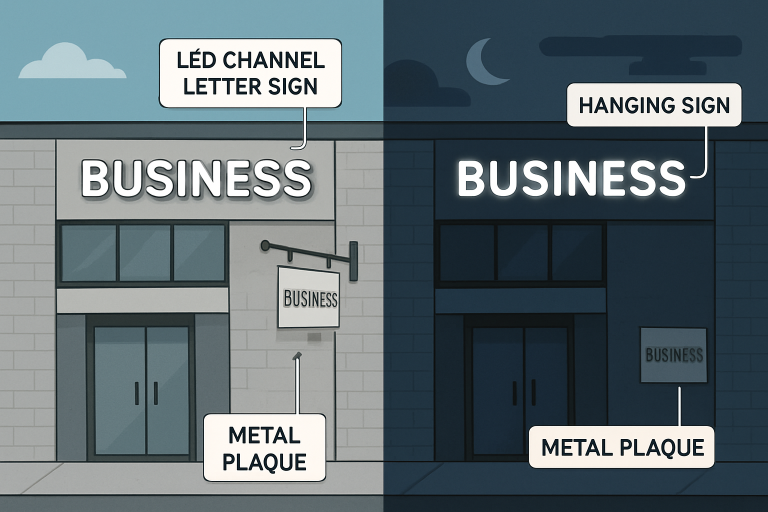
Maximizing sign visibility blends art and science. While size matters, effectiveness depends on contrast, placement, and lighting. LED and backlit signs stay visible after dusk, vital for late-night businesses. Proper placement ensures signs are in line of sight for motorists and pedestrians, free from obstructions. Energy-efficient LED lighting is a sustainable, cost-effective choice.
- Analyze typical viewing distances and lines of sight to optimize size and placement.
- Use photometric tools to determine the ideal lighting intensity and distribution.
- Implement LEDs to reduce operational expenses and minimize environmental impact.
Adhering To Regulations & Standards
Compliance with local codes is crucial when installing outdoor signs. Municipalities typically regulate sign size, lighting, color, and even installation methods. Additionally, accessibility standards specify design requirements that cater to all users, including tactile lettering for the visually impaired and sufficient contrast ratios. Failing to meet these requirements can result in fines or forced removal, emphasizing the importance of professional planning and knowledge of local ordinances. For more information on how regulations impact the built environment, The New York Times has explored the evolution of sign codes in major cities.
Maintenance & Longevity Tips
Well-maintained signs reinforce your organization’s commitment to quality and excellence. Maintenance should include periodic cleaning, touch-ups, and checks on structural and electrical parts. Addressing wear and seasonal issues like snow or foliage keeps signage visible, attractive, and safe. Keep a maintenance log to track repairs and upgrades, prolonging lifespan and aiding warranty claims.
- Plan biannual cleaning and comprehensive inspections to spot emerging issues before they escalate.
- Replace bulbs and verify electrical safety on a regular schedule.
- Remove vandalism or weather-related damage promptly to preserve appearance and brand value.
Latest Trends In Exterior Signage
The landscape of exterior signage is rapidly evolving. Digital displays, programmable LED screens, and interactive touch panels are increasingly common. These not only attract attention but can also adapt messaging on the fly—ideal for businesses needing to communicate promotions or community updates. Additionally, the rising demand for environmental sustainability has fostered innovation in recycled and low-impact materials, as well as solar-powered lighting options. Contemporary signage often incorporates site-specific artwork or cultural motifs, transforming ordinary markers into neighborhood icons and fostering a sense of place.
Conclusion
Exterior signs serve as tangible ambassadors for any business, organization, or public space—fusing branding, engineering, and aesthetic design. By thoughtfully balancing visual appeal, material durability, regulatory compliance, and modern trends, businesses can create exterior signs that not only capture attention but also communicate values and drive ongoing engagement.



No Comments