
Table of Contents
Reinforced concrete looks simple once the forms come off, yet much of its strength depends on decisions made before and during the pour. Experienced contractors understand how reinforcement placement, concrete consistency, curing, joints, and site preparation work together as one system. Mistakes hidden inside the finished slab can be expensive to correct later, especially on commercial, industrial, or heavily loaded surfaces.
Reinforcement Has to Be Positioned Where the Design Intended
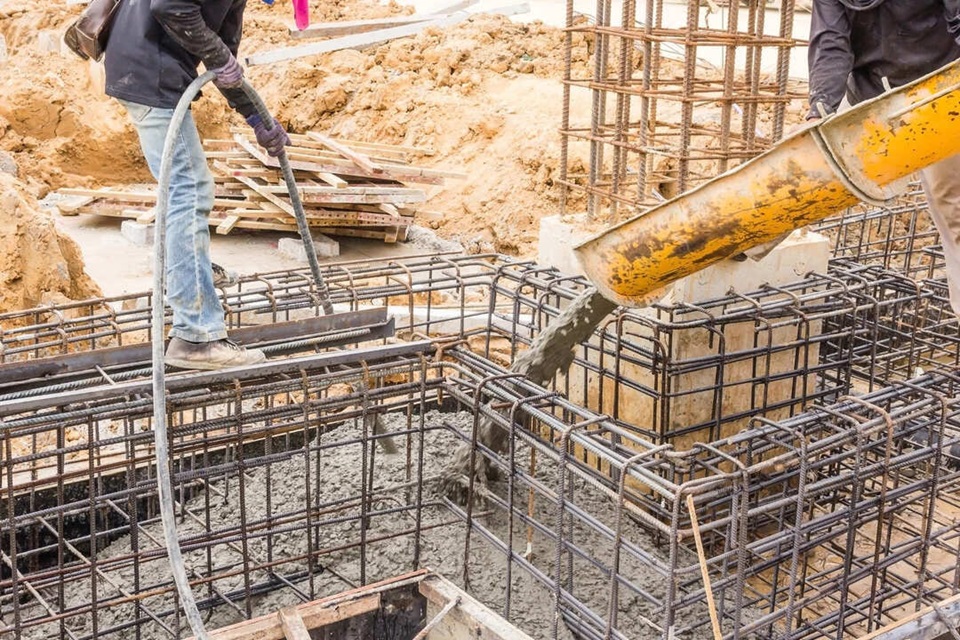
Steel bars and welded wire reinforcement only perform as designed when crews place them at the correct depth and spacing. Workers use chairs, supports, ties, and careful layout methods to prevent reinforcing material from dropping to the bottom of the form during placement.
Experienced crews also understand why concrete cover matters around embedded steel. Adequate cover protects reinforcement from moisture and environmental exposure while allowing the concrete and steel to share structural loads effectively.
Why Does Rebar Placement Require More Than Following a Drawing?
Construction drawings provide dimensions and spacing, but field conditions often require careful interpretation. Openings, drains, columns, embedded equipment, slab edges, and utility penetrations can create conflicts that crews must address without casually cutting or relocating reinforcing steel.
Seasoned contractors know when a field condition needs input from an engineer rather than an improvised fix. That judgment becomes particularly important in facility upgrades where new reinforced concrete must connect with existing slabs, foundations, or structural elements.
Concrete Placement Can Make or Break Good Reinforcement Work
Fresh concrete needs to flow around reinforcing steel without leaving large voids or pockets of trapped air. Proper vibration consolidates the mixture around bars and into corners, but excessive vibration can contribute to segregation and create its own quality problems.
Skilled placement crews coordinate delivery, spreading, consolidation, screeding, and finishing while the mixture remains workable. Delays between trucks or poor coordination can produce cold joints that affect appearance and, in certain applications, structural performance.
Experienced Contractors Pay Attention to the Base Below the Slab
Stable reinforced concrete still depends on reliable support beneath it. Contractors evaluate subgrade condition, moisture, aggregate thickness, grading, and compaction because settlement below the slab can create stresses that reinforcement alone cannot eliminate.
Owners comparing concrete companies near me should ask how the proposed work addresses the ground beneath the concrete, not just the reinforcement above it. A concrete driveway, warehouse slab, equipment pad, or commercial pavement can all develop problems when soft areas remain hidden below a well-reinforced surface.
Joint Planning Controls Where Movement Takes Place
Concrete shrinks as it cures and also responds to temperature changes after construction. Control joints create planned locations for that movement, helping reduce the likelihood of random cracks appearing across finished areas.
Joint layout requires more thought around columns, corners, drains, doorways, equipment foundations, and changes in slab geometry. Contractors with relevant project experience can coordinate joint spacing and timing so cuts work with the reinforcement plan rather than interfering with it.
How Does Experience Affect Curing and Early-Age Protection?
Curing helps newly placed concrete retain enough moisture and maintain suitable conditions while strength develops. Poor curing can contribute to surface weakness, excessive shrinkage, cracking, or reduced durability even if reinforcement and concrete placement were handled correctly.
Weather adds another layer of difficulty because heat, wind, cold, and direct sunlight can change how quickly moisture leaves the surface. Knowledgeable crews adjust placement schedules, curing methods, protection, and finishing practices to match actual site conditions instead of following the same routine on every project.
Larger Projects Demand Stronger Coordination Across Multiple Trades
Commercial and industrial concrete projects often share space with electricians, plumbers, steel crews, equipment installers, and other trades. Experienced concrete contractors near me must coordinate embedded items, sleeves, anchor bolts, trench locations, elevations, and access so later work does not require unnecessary cutting into completed reinforced concrete.
Project sequencing also matters when a facility must remain partly operational during construction. Crews may need to divide work into phases, maintain safe traffic routes, protect surrounding equipment, and schedule concrete placement around production or renovation activities.
Contractor Experience Shows Up in the Details That Stay Hidden
Good reinforced concrete work is difficult to judge by appearance alone because many important details disappear once the pour is finished. Documentation, reinforcement checks, proper concrete handling, curing procedures, joint planning, and site preparation often provide a better picture of workmanship than a smooth surface on opening day.
For property owners comparing concrete companies near me, relevant project history can reveal whether a contractor understands the demands of the intended application rather than simply knowing how to place concrete. Pros LLC works on commercial renovations, facility improvements, concrete surfaces, and other demanding projects where reinforcement, preparation, sequencing, and long-term use need to be considered together before construction begins.



No Comments