
Table of Contents
Key Takeaways
- Smart drainage systems use technology to track water flow, offering early warnings and minimizing risks.
- Connecting drainage with smart home platforms empowers homeowners with real-time insights and control.
- Conservation, efficiency, and long-term savings make these systems appealing for modern living.
Modern homeowners are turning to technology to make their living spaces more efficient, sustainable, and secure. One area undergoing rapid transformation is residential drainage. By leveraging advanced monitoring and automation, households are reducing the risks of water damage while contributing to more responsible water use. As homes become increasingly connected, smart solutions for managing rainwater and wastewater are becoming standard features in contemporary design.
The adoption of intelligent systems streamlines water flow management, helps prevent blockages, and reduces the likelihood of costly repairs. In areas frequently impacted by storms or heavy rainfall, these technologies can make a critical difference in protecting foundations and landscapes. As interest in sustainable, low-maintenance property features rises, the intersection of drainage systems with broader smart home networks becomes increasingly relevant.
In addition to the practical aspects of water management, homeowners are finding value in enhancing their outdoor spaces. Many are incorporating features like rain gardens, green roofs, and even artfully planned water features to promote both beauty and sustainability in landscape design.
These advances are not only practical. They represent an evolution in how urban and suburban environments are designed to address the challenges of water control. As technology and design trends converge, the future of home water management looks more connected and proactive than ever before.
Understanding Smart Drainage Systems
Smart drainage systems combine sensors, valves, and sometimes pumps with digital controls. They monitor water flow in real time, automatically detect anomalies such as blockages or leaks, and notify homeowners of any irregularities. By tapping into the Internet of Things (IoT), these systems gather data that helps optimize the management of both stormwater and household wastewater.
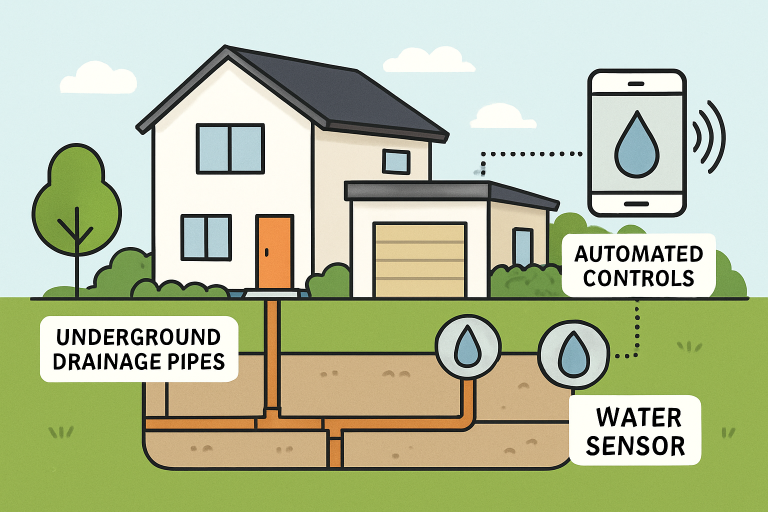
This data-driven approach supports timely maintenance, reducing the chances of flooding, erosion, and other complications that traditional drainage solutions might not catch until costly damage occurs. According to The New York Times, smart drainage technology is an essential part of the effort to make homes more resilient to extreme weather events.
Benefits Of Implementing Smart Drainage Solutions
- Preventive Maintenance: Systems that monitor for clogs or leaks reduce the need for emergency repairs and extend the life of your pipes and fixtures.
- Water Conservation: Smart controls help ensure no excess water is wasted, which is especially important as utility rates rise and droughts become more frequent.
- Environmental Impact: Reduced water runoff and well-controlled flows help minimize erosion, flooding, and pollution in local waterways. As highlighted by National Geographic, this approach supports healthier ecosystems in both cities and suburbs.
Integration With Smart Home Ecosystems
Today’s smart drainage technologies can be integrated with popular smart home ecosystems, including Google Home, Amazon Alexa, and Apple HomeKit. This connectivity enables notifications on your phone or smart speaker when there is an issue, remote monitoring while you are away, and even automatic responses, such as closing a valve if a leak is detected.
By connecting all the key systems in a home, from security and lighting to heating and drainage, property owners gain a holistic understanding of their environment and can streamline maintenance. This integration provides not only peace of mind but also ensures energy and resource savings over time.
Real-World Applications & Case Studies
Cities worldwide are leveraging smart drainage to combat urban flooding and improve public safety. For example, in Singapore, strategically placed sensors monitor stormwater levels and trigger automated pumps when thresholds are crossed. This proactive strategy has contributed to a reported 30 percent reduction in flood events, resulting in fewer damages and disruptions for residents and businesses. A LinkedIn feature documents several successful real-world implementations that highlight the growing role of technology in stormwater management.
On a smaller scale, individual homeowners who have adopted these systems report savings due to fewer plumbing emergencies and improved landscape health. Increased property value and enhanced curb appeal are additional incentives, especially for those considering future home sales.
Challenges & Considerations
- Initial Investment: The cost of installation can be high and may require budget planning for larger homes or establishments.
- Technical Complexity: Professional installation and integration may be necessary, as the systems must connect seamlessly with existing plumbing and home automation networks.
- Maintenance Requirements: While these solutions are designed to minimize issues, periodic checks and updates are needed to keep them functioning optimally.
Future Trends In Smart Drainage Technology
The trends emerging in smart drainage include increased reliance on artificial intelligence to predict maintenance needs and reduce downtime. Companies are developing more user-friendly interfaces and affordable kits, making it easier for homeowners to retrofit older properties or expand existing systems. As awareness of climate adaptation grows, the adoption rate for these technologies is likely to accelerate, further blurring the distinction between traditional household services and digital controls.
Conclusion
Smart drainage solutions are redefining how homes manage water, combining the benefits of automation, sustainability, and cost savings. By integrating these systems into a holistic smart home environment, homeowners can safeguard their investment, promote environmental health, and enjoy greater convenience. As technology evolves, the adoption of smart drainage systems is poised to become a cornerstone of modern home design.


No Comments